A solar system can appear to be operating while producing less electricity than expected or failing to send power back to the switchboard. Warning lights, inverter error codes, lower app readings and unexpectedly high electricity bills can all suggest a problem, but they do not identify the cause on their own.
Professional solar system fault finding involves testing each part of the system in a logical order. The electrician checks the solar panels and DC circuits, examines the inverter, confirms the AC supply and measures the current reaching the switchboard. This process helps locate the fault without replacing working equipment unnecessarily.
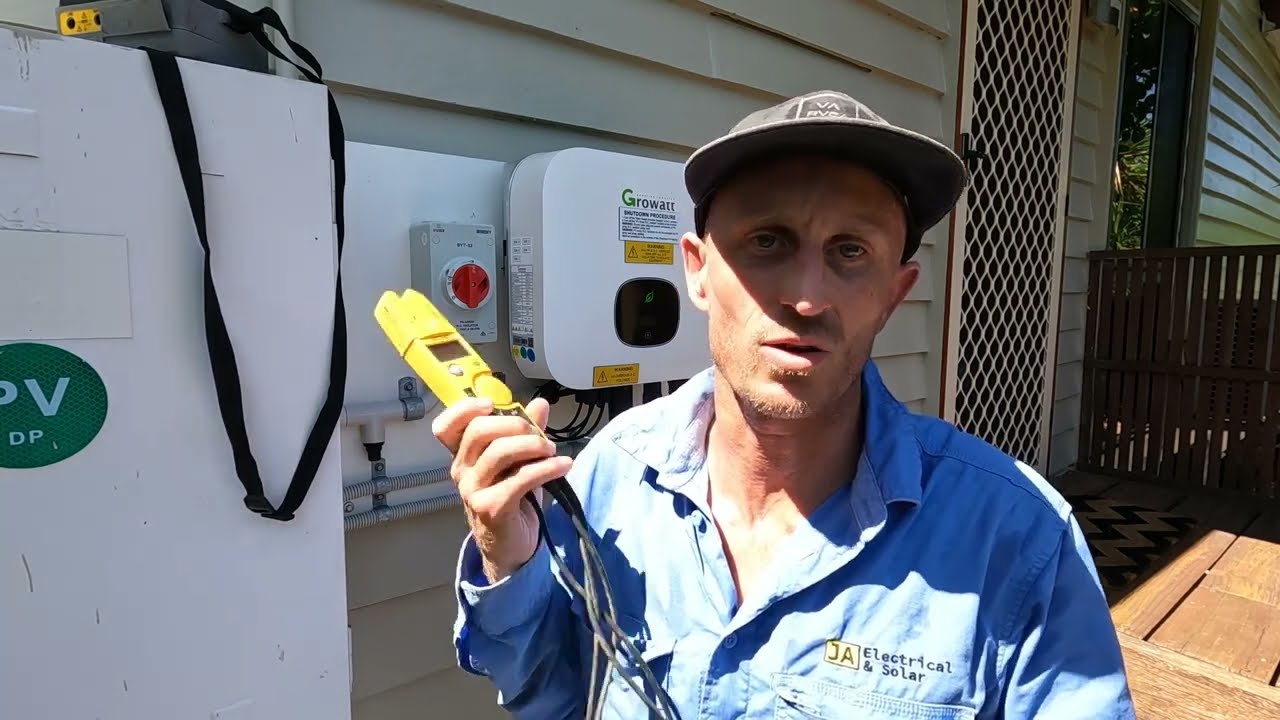
In the video below, JA Electrical & Solar demonstrates the main tests used to diagnose a solar system fault. The article explains each stage and the common problems found in solar installations across the Gold Coast.
Watch the full solar fault-finding video on YouTube
Electrical safety warning: Solar panels can continue producing dangerous DC voltage whenever exposed to light, even after parts of the system have been switched off. Inverter terminals, rooftop isolators and switchboards should only be opened or tested by a suitably licensed electrician. The information below explains the diagnostic process and is not a DIY testing guide.
Quick Answer: How Is a Solar System Fault Diagnosed?
An electrician generally diagnoses a solar system by completing five main checks:
- Measuring the DC voltage produced by the solar panel strings
- Performing insulation-resistance testing to detect earth faults
- Measuring the short-circuit current of each panel string
- Testing the AC supply at the inverter
- Measuring the inverter’s actual current output at the switchboard
These tests allow the electrician to separate a panel or rooftop fault from an inverter, AC supply or switchboard problem.
Signs Your Solar System May Have a Fault
A complete shutdown is not the only sign of a solar problem. Some systems continue operating at reduced capacity, making the fault harder to notice.
Common warning signs include:
- A fault light or error message on the inverter
- No production showing in the monitoring app
- Solar generation dropping without an obvious reason
- One solar string producing less than another
- The inverter regularly restarting or switching off
- Unexplained increases in grid electricity use
- Burnt smells, heat damage or discolouration near electrical equipment
- The inverter displaying power production that does not match meter readings
Monitoring issues can also create the impression that the solar system has stopped. A failed Wi-Fi connection may prevent an app from updating even when the system is still generating electricity. An electrician can check the physical output instead of relying only on the inverter screen or app.
What Are the Most Common Solar System Faults?
Based on the fault-finding process demonstrated in the video, problems are commonly found in four areas.
1. Solar Inverter Faults
The inverter is often one of the first components investigated. It converts the DC electricity produced by the panels into AC electricity that the property can use.
An inverter may develop an internal fault, display an error code, fail to start or report output that is not reaching the switchboard. Heat, age, ventilation problems, electrical surges and internal component failure can all affect inverter operation.
If the inverter is faulty, it may need a reset, configuration correction, warranty assessment, repair or replacement. Learn more about solar inverters and their role within a complete system.
2. Rooftop Wiring and Installation Faults
A problem on the roof does not always mean the solar panels have failed. Faults can occur in DC isolators, connectors, cables and terminations.
Water entering a rooftop isolator can cause corrosion, insulation failure, overheating or short-circuiting. A connector that was not fitted correctly may also develop excessive resistance and heat damage. Moisture can make an intermittent earth fault worse, causing the inverter to shut down when wet conditions return.
These issues require a detailed inspection by someone trained to work safely around live solar DC circuits.
3. Damaged or Degraded Solar Panels
Solar panels are generally reliable, but physical damage and deterioration can reduce their output. Possible problems include:
- Cracked glass or damaged cells
- Failed bypass diodes
- Moisture entering the panel
- Delamination or deterioration
- Burnt connectors or junction boxes
- Uneven output between strings
- Insulation breaking down between live parts and the frame
A visual inspection may identify obvious damage, but electrical testing is needed to determine how the panel or string is performing. JA Electrical & Solar also provides information about solar panels and system design.
4. AC Supply or Switchboard Faults
The AC side is generally checked after the panel circuits and inverter. The inverter needs a suitable AC supply before it can operate correctly and export electricity.
Possible faults include a tripped or damaged circuit breaker, wiring defect, supply problem, loose connection or switchboard issue. These problems may stop the inverter from connecting to the property or grid, even when the panels are producing the expected DC voltage.
Where existing electrical equipment needs attention, a switchboard upgrade may sometimes form part of the solution. This depends on the condition and capacity of the installation.
The Five Solar Fault-Finding Tests Explained
1. DC Voltage Testing
The first test measures the DC voltage from each solar panel string. In the demonstration, both strings produced readings of approximately 300 to 330 volts, indicating that voltage was present and broadly comparable across the two circuits.
The expected reading varies according to the number and type of panels, system configuration, sunlight, temperature and inverter design. A reading should therefore be compared with the system specifications rather than judged against one universal number.
A missing, unusually low or inconsistent voltage reading may point to a disconnected circuit, damaged connector, wiring fault or problem within the panel string.
2. Insulation-Resistance Testing
An insulation-resistance test, commonly performed with an insulation resistance tester or “megger”, checks whether electricity is leaking from the panel circuit towards earth.
The electrician tests between the panel conductors and an earthed metal component, such as the panel frame or mounting structure. A low insulation-resistance result can indicate damaged cable insulation, moisture ingress, a connector fault or electrical leakage within a panel.
The video discusses readings around 10 megaohms or lower as a possible warning sign. However, results must be assessed against the inverter manufacturer’s requirements, system conditions and applicable Australian standards. Moisture can also affect the result, which is why some faults appear mainly during or after rain.
3. Short-Circuit Current Testing
Short-circuit current testing measures how much current each solar string can produce under the conditions present at the time.
In the demonstration, the strings produced approximately 11 and 13 amps. The difference was attributed to one section receiving more sunlight. Current can vary with irradiance, shading, panel orientation, temperature and the electrical specifications of the modules.
Comparing the strings can reveal an underperforming circuit. A much lower result from one string may indicate shading, a damaged panel, a poor connection or another DC-side fault.
This is specialist testing. Connecting or disconnecting live solar DC plugs incorrectly can create an electrical arc, severe burns or fire.
4. AC Testing at the Inverter
Once the panel circuits have been assessed, the electrician checks whether the correct AC supply is reaching the inverter. This includes testing:
- Active to neutral
- Active to earth
- Neutral to earth
The readings help confirm whether the inverter has the supply conditions it needs to operate. An abnormal result may direct the investigation towards the AC wiring, circuit protection, switchboard or grid connection rather than the panels.
5. Current Testing at the Switchboard
The last step confirms whether the inverter is actually delivering electricity back to the switchboard.
In the video, the inverter displayed approximately 2.3kW of generation. Dividing 2,300 watts by a nominal 230-volt supply gives about 10 amps. The clamp-meter reading at the switchboard was close to this figure and increased as the inverter ramped up, confirming that its output was reaching the property.
This final check matters because an inverter display can indicate generation even when the expected current is not arriving at the switchboard. Measuring the physical current provides independent confirmation of the system’s output.
A High Power Bill Does Not Always Mean the Solar Is Broken
An unexpectedly high electricity bill may indicate reduced solar production, but several non-fault causes should also be checked.
Your electricity retailer may have reduced the feed-in tariff paid for exported solar electricity, increased usage rates or changed the daily supply charge. Household consumption may also have increased due to air conditioning, pool equipment, electric hot water, an EV or changes in when electricity is used.
Solar is generally most valuable when the property uses the electricity as it is generated. Exporting power at a low feed-in rate and buying it back later at a higher usage rate can still produce a sizeable bill, even when the system is operating normally.
Before assuming there is an equipment fault, compare:
- Current and previous electricity plans
- Feed-in tariff changes
- Daily grid consumption
- Solar generation history
- Import and export meter data
- Recent changes in household electricity use
If the figures still do not make sense, a physical system test can determine whether the inverter’s reported output matches the power reaching the switchboard.
Can JA Electrical & Solar Inspect a System Installed by Another Company?
Yes. JA Electrical & Solar states that it can investigate and repair solar systems installed by other providers. This may include inverter faults, poor solar production, monitoring problems, damaged equipment, electrical defects and systems that are no longer performing as expected.
The aim of fault finding is to identify the failed component before recommending repairs. A working system should not be replaced simply because one inverter, connector, isolator or panel has developed a fault. If an older installation is no longer practical to repair, the available options can be assessed based on its age, condition and compatibility with current equipment.
The team services homes and businesses from the Northern Rivers through to the Gold Coast. Visit the JA Electrical & Solar website to explore its solar, battery and electrical services.
Frequently Asked Questions
Why has my solar inverter stopped working?
An inverter may stop because of an internal fault, earth leakage, low or abnormal DC input, an AC supply problem, excessive voltage, overheating or a grid-related error. The displayed fault code provides a starting point, but electrical testing may be needed to confirm the cause.
Can solar panels still be live when the inverter is switched off?
Yes. Solar panels produce DC electricity whenever sufficient light reaches them. Switching off the inverter or AC isolator does not necessarily remove the voltage from the rooftop panel circuits.
Why does my solar system stop after rain?
Moisture may enter a damaged isolator, connector, cable or panel and reduce the circuit’s insulation resistance. The inverter may then detect an earth fault and shut down for safety. The problem can disappear as the system dries, so intermittent faults still require investigation.
How can an electrician tell whether a solar panel string is faulty?
The electrician can compare DC voltage, insulation resistance and short-circuit current across the strings. An abnormal result helps narrow the fault to a particular circuit, connector, cable or panel.
Can an inverter show power that is not reaching the switchboard?
It is possible. That is why the fault-finding process includes measuring the actual AC current at the switchboard and comparing it with the inverter’s reported output.
Should I test a solar system myself?
Homeowners can safely review the inverter display, monitoring app and electricity bills from normal accessible areas. Do not open the inverter, unplug DC connectors, enter the switchboard or perform electrical measurements unless you are licensed and trained to do so.
Solar System Fault Finding Across the Gold Coast
If your inverter is showing an error, your generation has fallen or your electricity bill no longer matches the solar results you expected, JA Electrical & Solar can test the system and identify where the problem is occurring.
The assessment may include DC voltage testing, insulation-resistance testing, string-current comparisons, inverter checks and switchboard measurements. Once the fault is located, you can make an informed decision about repairing the affected part, replacing failed equipment or upgrading an older system.
For solar system fault finding on the Gold Coast, submit an enquiry through the JA Electrical & Solar contact page or phone 0490 777 136.