When you’re thinking about installing solar or a battery, the size of the cables supplying your house probably isn’t the first thing that comes to mind.
But it’s something we check when assessing a property — and on some jobs, it can completely change whether installing solar or a battery makes sense.
We recently looked at a property in the Northern Rivers where this was exactly the case.
The original plan: solar and battery
The homeowner was looking at installing solar and battery storage.
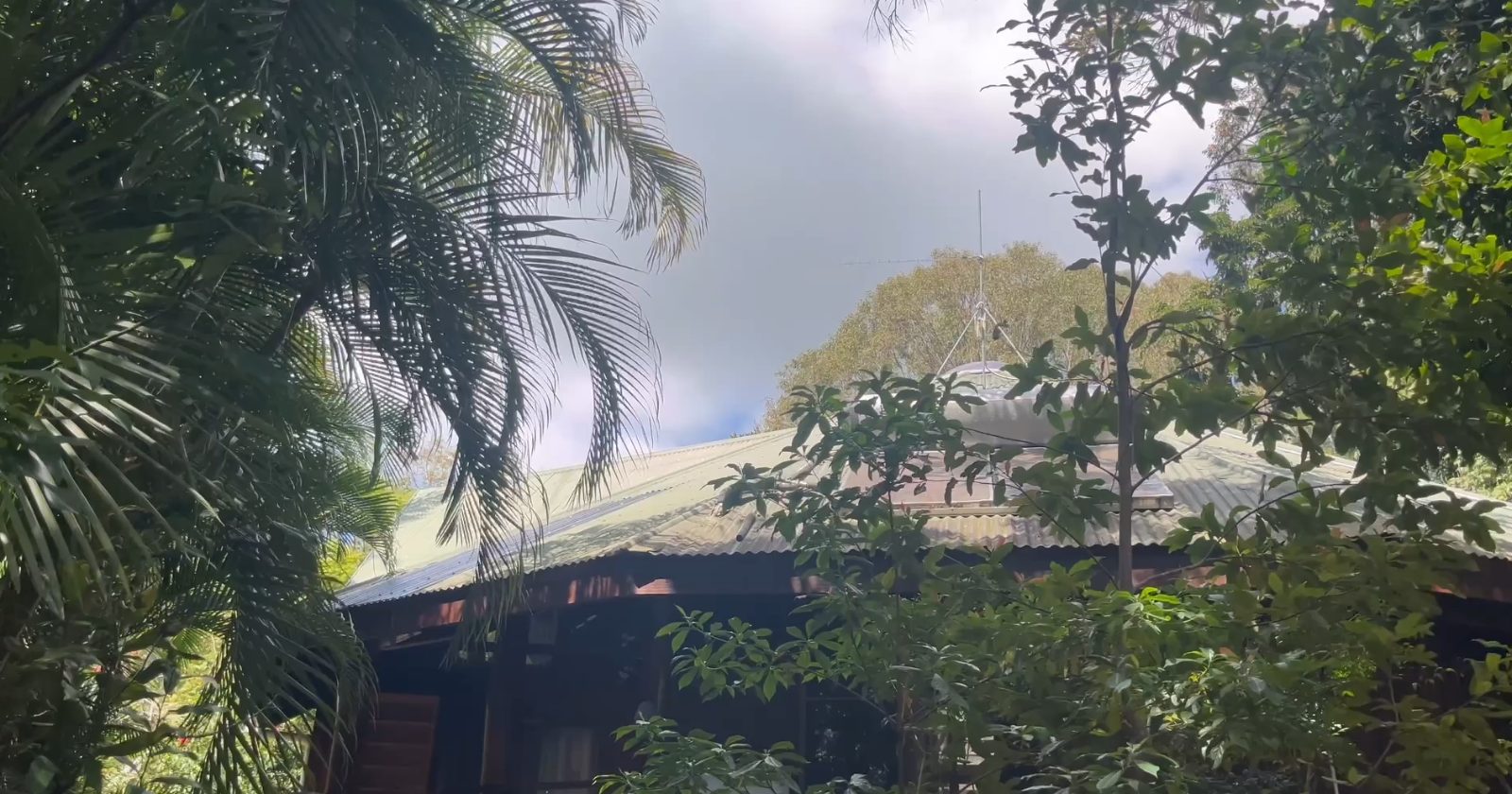
The first problem was the roof.
It was very steep and surrounded by a lot of shade. Although we could physically fit some solar panels on the roof, there wasn’t enough good, unshaded roof area for us to be confident that solar would perform well enough to justify the investment.
So we started looking at another option: installing a battery without solar and charging it from the grid using an electricity plan offering three hours of free power each day.
On the surface, that could have been a good solution.
But then we checked the home’s electrical supply.
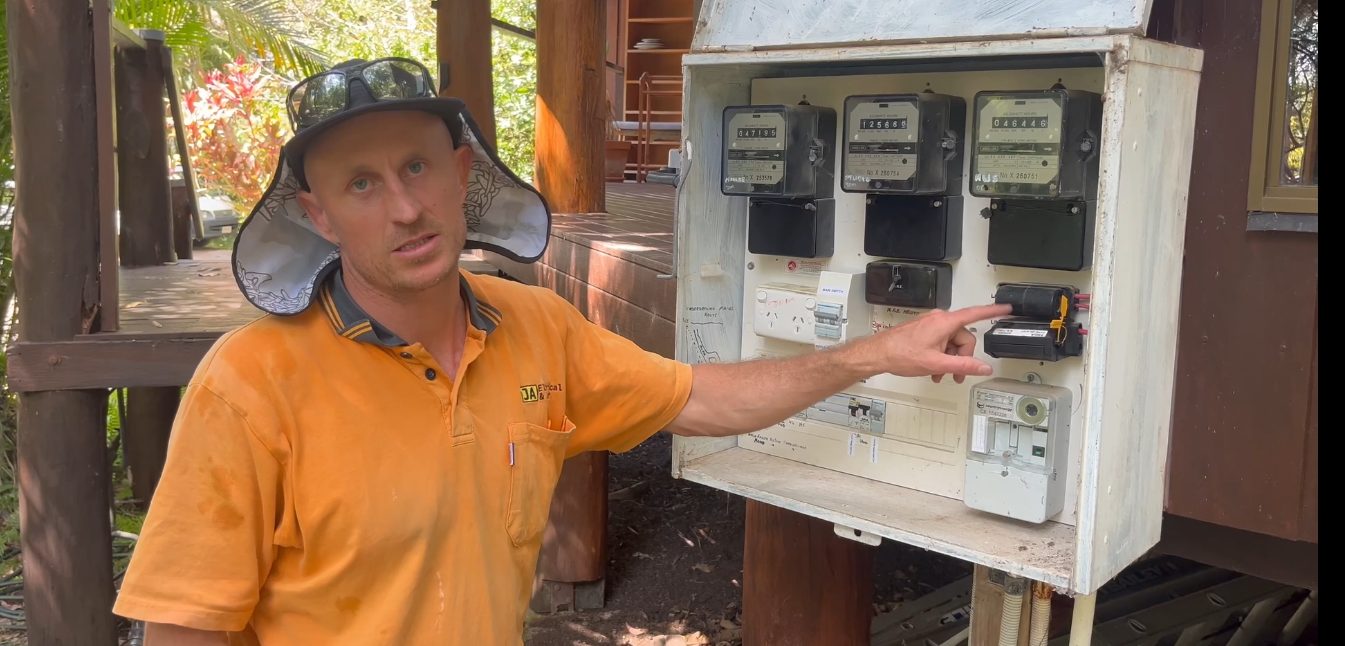
The property had a very long underground electrical supply.
The existing cables ran roughly 70–80 metres from the house toward the network connection and were only around 10 mm².
For an ordinary homeowner, those numbers probably don’t mean much.
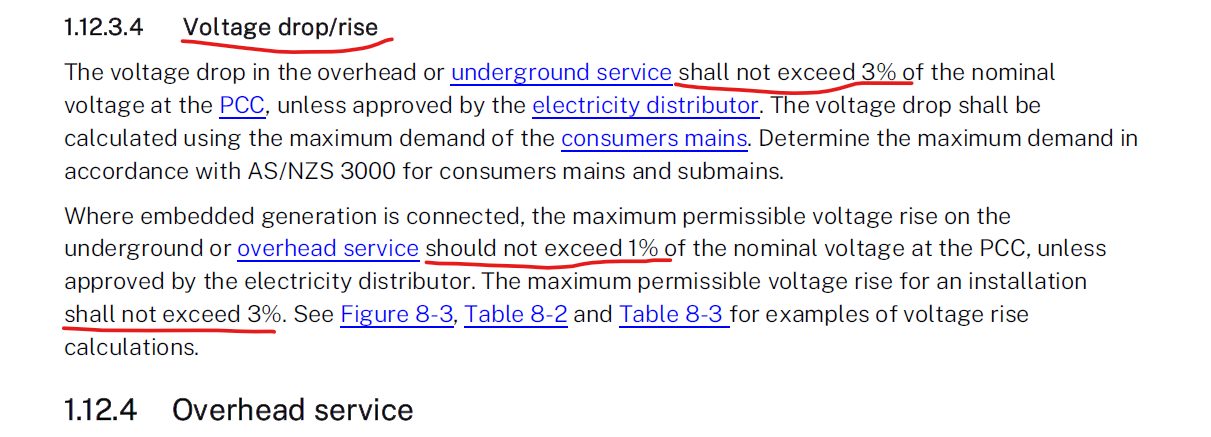
For this installation, we needed to comply with the network’s 3% maximum voltage-rise requirement. In simple terms, from the point of connection to the inverter terminals, the voltage rise caused by the installation can’t exceed 3%.
When we looked at the length and size of the existing service mains at this property, they weren’t going to meet that requirement for the system we were considering.
What does 3% voltage rise have to do with solar?
A simple way of thinking about voltage rise is to imagine water flowing through a pipe.
If your solar inverter wants to push electricity back toward the electricity network, its voltage needs to be high enough for the electricity to flow in that direction.
The resistance of the cables between the inverter and the network causes the voltage at the inverter to rise as power is exported.
That’s why cable size and distance matter.
A long run of relatively small cable can create significantly more voltage rise than a short run of larger cable.
And because we have an actual 3% limit to design within, we can’t simply ignore an undersized cable because replacing it is inconvenient or expensive.
That’s one reason we don’t just look at how many solar panels will fit on someone’s roof. The electrical infrastructure supplying the property matters as well.
So why not just upgrade the cables?
We could.
But this particular property demonstrates why what is technically possible isn’t always financially sensible.
The existing underground route was already long. If we replaced it, we couldn’t simply take the shortest route through the driveway.
A new trench would potentially have to travel around the house, bringing the total underground cable run closer to 90–100 metres.
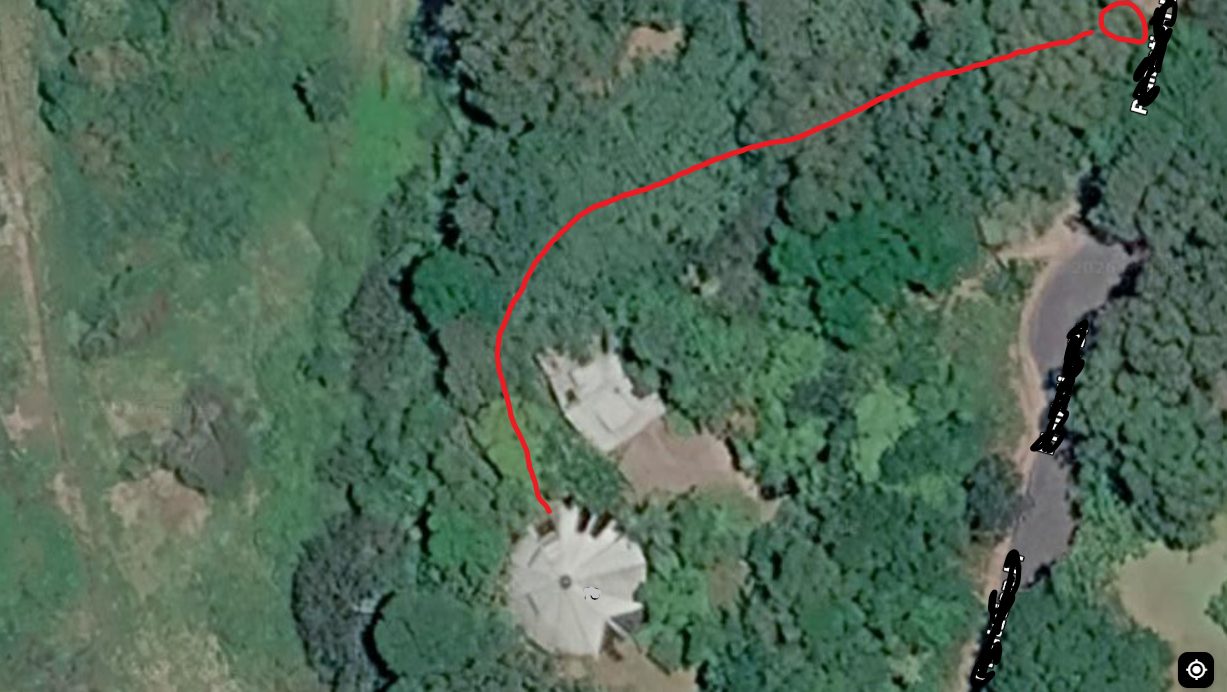
Because of the distance involved, it would also require substantially larger cables and changes to the supply arrangement.
We estimated that the service upgrade could potentially cost up to around $10,000.
And that’s before considering the cost of the battery itself.
At that point, we had to ask a much more important question:
In our view, it didn’t.
Sometimes the right solar recommendation is not to install solar
We could have designed a solution.
We could have upgraded the service mains, completed the electrical work and installed a battery.
But spending potentially $10,000 upgrading the electrical supply just so we could then install a battery dramatically changed the economics of the project.
Combine that with a steep, heavily shaded roof that wasn’t particularly suitable for solar, and the project simply wasn’t attractive enough for us to recommend proceeding.
So our recommendation to the homeowner was essentially:
Don’t do it.
That’s an important part of properly assessing solar and battery installations.
The objective shouldn’t be to find a way to sell a system to every house. It should be to work out whether the system is actually suitable for the property and whether the numbers make sense.
Why we inspect the electrical supply before designing the system
This job is also a good example of why we prefer to properly inspect a property rather than designing everything from a few photos.
If nobody checks the existing service mains, an issue like this can be missed completely.
The system can look perfectly achievable on paper.
Then an installation crew arrives and discovers that the existing electrical supply isn’t suitable.
Now there’s a problem.
Either the job stops while everyone works out who is going to pay for the additional electrical work, or there’s pressure to find a shortcut and keep the installation moving.
Neither is a good outcome for the homeowner.
We would rather identify these problems before the installation starts.
Your roof isn’t the only thing that determines whether your house is suitable for solar
When assessing a solar and battery installation, there can be much more to consider than simply:
Depending on the property, we may also need to consider:
- Existing switchboard
- Service mains
- Number of phases
- Cable sizes and lengths
- Voltage rise
- Network requirements
- Shading and available roof area
- Battery location
- Current and future energy requirements
This particular house failed the test in two important areas.
The roof wasn’t suitable enough for solar, and making the electrical supply suitable for the battery solution would have required too much additional work.
In that situation, spending more money wasn’t the answer.
The better design decision was not to install the system at all.
Frequently Asked Questions
Can service mains be too small for solar?
Yes. Cable size, cable length and the amount of power being transferred all affect voltage rise. A long run of relatively small service mains can become a limiting factor when designing a solar installation.
That doesn’t automatically mean solar can’t be installed. Larger cables or changes to the electrical supply may solve the problem, but the cost of those works needs to be considered as part of the overall project.
What is the 3% voltage-rise rule for solar?
For the installation discussed in this article, we had to design within a maximum 3% voltage rise from the point of connection to the inverter terminals.
Cable size, cable length and the amount of power being transferred all affect that calculation.
This is why checking the existing electrical supply is an important part of designing larger solar systems.
Can you install a battery without solar panels?
Yes.
A battery can potentially be charged from the electricity grid rather than from solar panels.
For this property, we considered using a battery with an electricity plan offering three hours of free power each day because the roof wasn’t particularly suitable for solar.
However, the existing electrical supply and the cost of upgrading it made that option financially unattractive. Systems may require solar panels for battery rebate.
Do I need to upgrade my service mains before installing solar?
Not necessarily.
Every property is different. The existing cable size, cable length, number of phases, proposed inverter capacity and network requirements all need to be considered.
If the existing service mains aren’t suitable, upgrading them may become part of the solar project.
That’s something we’d rather identify during the design process than discover after the installation has already started.
Planning solar or a battery?
Before deciding how many panels or how much battery storage to install, it’s worth making sure the property itself is suitable for the system.
At JA Electrical & Solar, we look at the complete installation — including the roof, shading, switchboard, service mains, network requirements, solar, battery storage and your future energy needs.
That means if there’s an issue that could add thousands of dollars to the job, we’d rather find it before you commit to the system.
Talk to JA Electrical & SolarCall 0490 777 136
Solar • Battery • Level 2 Electrical
Northern Rivers to the Gold Coast
Done Properly. Backed After We Leave.