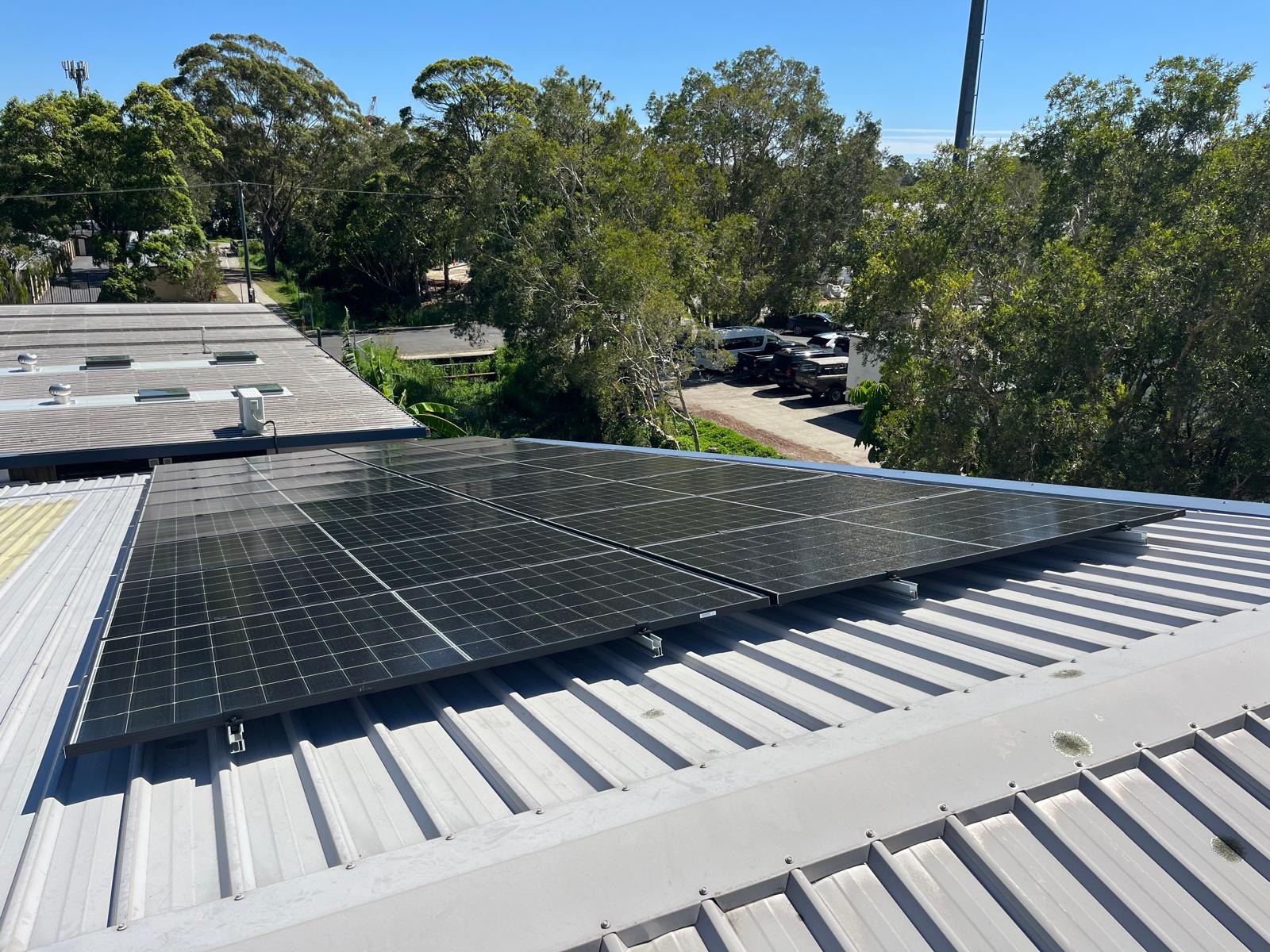
Solar panel installation Gold Coast pricing in 2026 usually sits at about $4,000–$7,000 for a 6.6 kW system and $8,000–$12,000 for a 10 kW system, after the federal STC discount. The final price depends on the panels and inverter you choose, your roof, and whether your switchboard and service mains are ready for solar.
The Gold Coast gets plenty of sun, so rooftop solar works well here. But a quote that only counts how many panels will fit on the roof can leave out the things that decide whether a system is safe, gets approved and actually pays for itself. This guide covers what a solar installation on the Gold Coast involves in 2026: cost, sizing, rebates, Energex approval, timeframes, and what a proper site inspection should pick up.
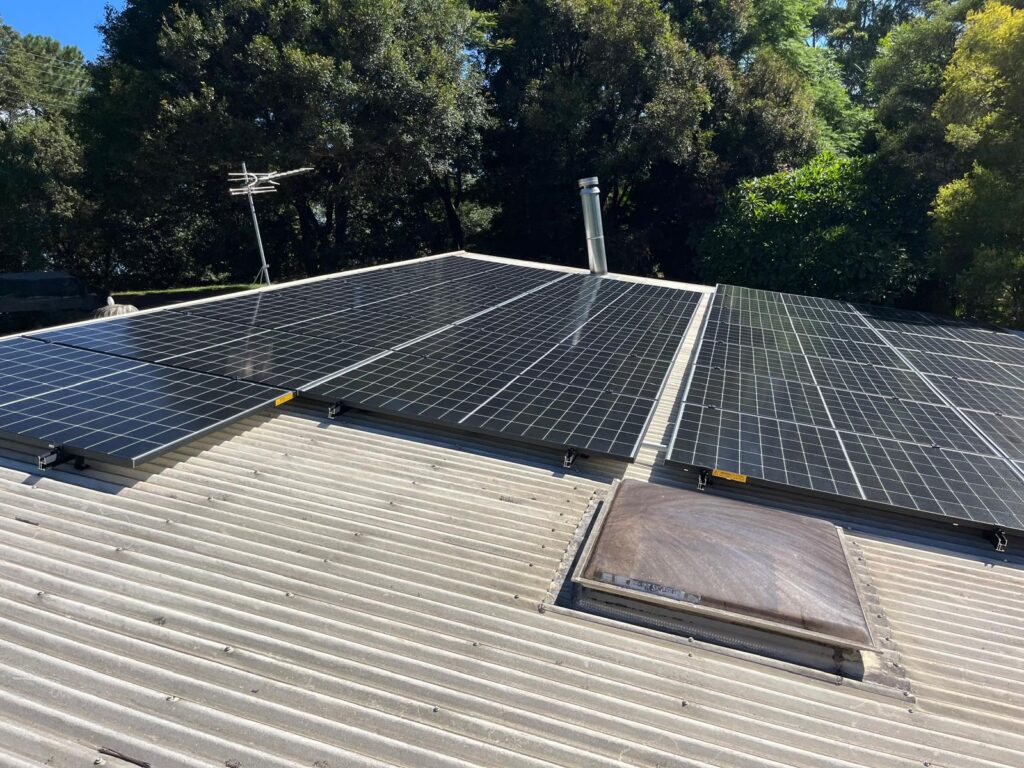
How much does solar panel installation cost on the Gold Coast?
Most Gold Coast homes pay roughly $1,000 per kilowatt installed after the STC discount. Budget systems can come in lower, and premium panels, microinverters or optimisers cost more. These are typical 2026 market ranges, not a quote:
| System size | Typical installed price (after STC) | Usually suits |
|---|---|---|
| 6.6 kW | $4,000 – $7,000 | Small to medium homes, moderate daytime use |
| 10 kW | $8,000 – $12,000 | Larger families, pool pumps, air conditioning, EV charging |
| 13 kW+ | $10,000 – $15,000+ | High usage homes, usually three-phase |
What pushes the price up or down:
- Panel and inverter brand, warranty and efficiency
- Roof type: tin, tile, Klip-Lok, flat or steep
- Two-storey access and safety equipment
- Switchboard upgrades needed to fit the solar circuit
- Service mains or main switch upgrades
- Shade management with optimisers or microinverters
- Battery-ready or hybrid inverters
- Single-phase vs three-phase supply
The cheapest quote often leaves the electrical side out. If an old switchboard or undersized cabling turns up on installation day, the price can change on the spot. We’ve written about a real job where the service mains made solar uneconomical, and it’s worth reading before you compare quotes.
What size solar system do I need on the Gold Coast?
Work from your electricity bill, not your roof. Find your average daily usage in kWh, then estimate how much of it happens during daylight hours. On the Gold Coast, each kilowatt of well-placed panels produces roughly 4 kWh per day averaged across the year, and more in summer.
- Under 15 kWh/day: a 5–6.6 kW system is usually enough.
- 15–25 kWh/day: 6.6–10 kW, especially if you run the pool pump, dishwasher and hot water during the day.
- 25 kWh/day or more, an EV, or a battery planned: 10 kW+, possibly on three-phase.
Is a 6.6 kW solar system big enough?
For many 2–4 person households, yes. A 6.6 kW array usually pairs with a 5 kW inverter and produces around 25–28 kWh on an average day. It’s less suitable if you plan to add a battery or an EV, because there won’t be much surplus left to charge them.
Is 10 kW solar enough to run a house?
A 10 kW system covers the daytime load of most Gold Coast homes, including air conditioning, with surplus for a battery. It can’t run a house overnight on its own. For that you need a battery, or you keep buying power from the grid after sunset.
Is there a government solar rebate in Queensland in 2026?
Yes. The main incentive is the federal Small-scale Renewable Energy Scheme, usually called the STC rebate. Your installer creates small-scale technology certificates (STCs) for your system and takes their value off your upfront price.
- The number of STCs depends on system size, location (the Gold Coast is in Zone 3) and the deeming period.
- The deeming period is five years for systems installed in 2026. It drops by one year every 1 January until the scheme ends in 2030.
- Batteries can also earn STCs under the federal Cheaper Home Batteries Program. That discount also steps down over time.
The Clean Energy Regulator publishes the official STC rules and calculators. In practice, installing sooner rather than later means a bigger rebate. Just don’t rush past the inspection to get it.
Energex approval, single-phase limits and export limits
Every grid-connected system on the Gold Coast needs approval from Energex, the local distribution network, before it can be connected. Your installer lodges the application. Most standard residential applications come back within a few business days to a few weeks.
- Single-phase homes: a fixed connection is generally limited to 10 kVA of inverter capacity.
- Export limits: fixed connections are commonly limited to 5 kW of export per phase, or zero in constrained areas. Dynamic connections can allow more.
- Three-phase homes can install larger systems, with limits applied per phase.
Energex sets the current rules on its connections pages, and they do change, so your installer should confirm them against your address before finalising the design. Across the border in the Tweed and Northern Rivers, Essential Energy is the network and its rules are different.
How long does solar installation take? The process step by step
The installation itself usually takes one to two days. From first quote to switch-on, allow roughly two to six weeks, depending on Energex approval and when the meter is changed.
Site inspection
Roof, shading, switchboard, service mains, phases and usage are checked on site.
Design & quote
Panel layout, inverter sizing and any electrical upgrades are written into the quote.
Network approval
The installer applies to Energex for connection approval.
Installation day
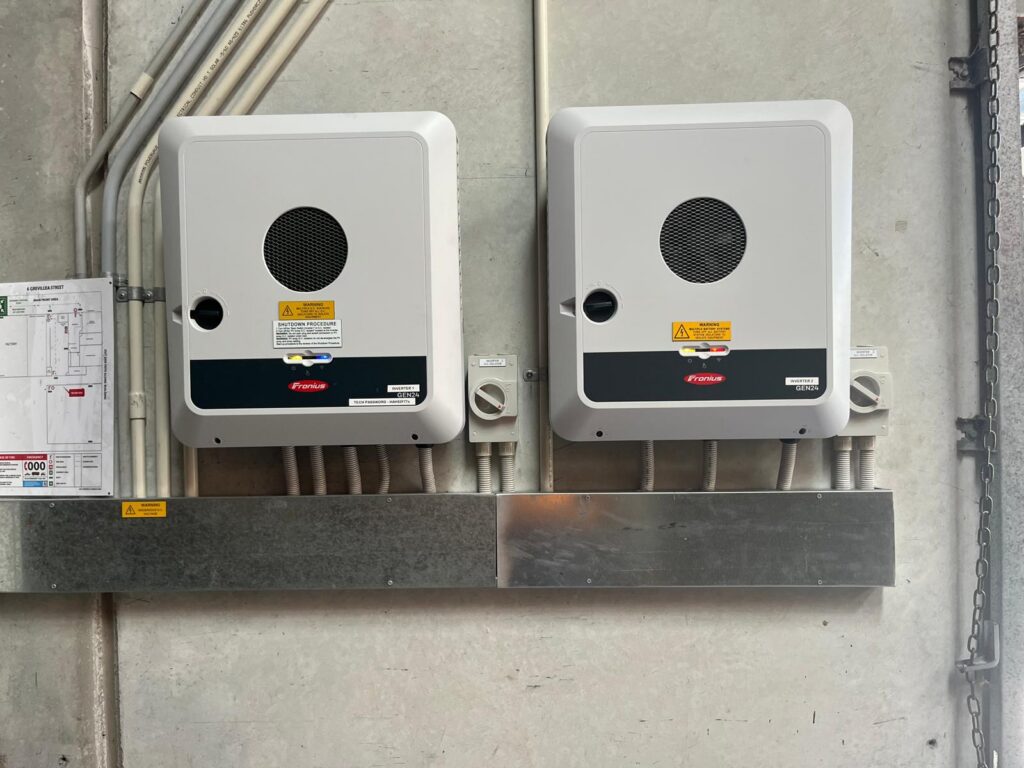
Racking, panels, inverter, isolators and cabling are installed and tested.
Commissioning & meter
The system is commissioned and your retailer arranges a meter change if needed.
Handover
You get monitoring set up, compliance paperwork and warranty details.
Do solar panels work immediately after installation?
The system can generate power once it’s commissioned. But your bill may not show export credits until the meter has been reconfigured or replaced. Your installer and retailer should tell you when the system can export.
What should be checked before you sign a solar quote?
A good installer inspects the whole electrical installation, not just the roof. These are the issues we most often find on Gold Coast and Northern Rivers homes:
- An old switchboard with no room for the solar circuit
- Undersized or very long service mains causing voltage rise
- Shade from trees, aerials, air-conditioners or neighbouring buildings
- Roof condition and how the array can be safely accessed
- Single-phase supply limiting system size
- Room for a battery or hybrid inverter later
- Where the isolators, cabling and inverter will be mounted
- Existing solar that needs repair, removal or an upgrade
Poor workmanship shows up years later. Our solar isolator fire inspection and solar fault finding guide show what happens when cable entries, layout and access aren’t thought through.
How to choose a solar installer on the Gold Coast
- Accreditation: the system designer and installer should hold current Solar Accreditation Australia (SAA) accreditation, which you need to claim STCs.
- Licensed electricians: all AC work must be done by a licensed electrician. If service work is involved, ask whether they hold Level 2 accreditation.
- Itemised quote: panel and inverter models, number of panels, mounting system, isolators and any switchboard work should be listed.
- Warranties: check the panel product and performance warranties, the inverter warranty and the installer’s own workmanship warranty.
- Local support: make sure someone will actually come back if the inverter faults or production drops.
We install and service solar across the southern Gold Coast and Northern Rivers, including Coolangatta, Robina, Broadbeach and Helensvale. See our solar panels, solar inverters, solar batteries and switchboard upgrades pages for more detail.
Frequently Asked Questions
How much does it cost to install solar panels on the Gold Coast?
In 2026, a 6.6 kW system typically costs about $4,000–$7,000 installed and a 10 kW system about $8,000–$12,000, after the STC discount. Switchboard upgrades, roof access and premium equipment can add to that. A site inspection gives you the real figure.
What is the 20% rule for solar panels?
It isn’t an official rule. People usually mean a sizing rule of thumb: allow roughly 20% more generation than you think you need, to cover cloudy days, panel degradation and future usage. Use it as a starting point. Your actual usage data and roof should decide the size.
Can I install a 10 kW solar system on single-phase power?
Often, yes. Energex generally allows up to 10 kVA of solar inverter capacity on a single-phase fixed connection, with exports limited. Larger arrays can sometimes go with a 10 kW inverter, within the oversizing rules. Your installer must confirm the limits for your address.
Why are people getting rid of their solar panels?
Mostly because the systems are old. Many Gold Coast homes have small 1.5–3 kW systems from 2008–2013 with failing inverters, degraded panels or unsafe isolators. Replacing them with a modern, larger system usually makes more sense than repairing them, especially before a reroof.
Are solar rebates reducing in 2026?
Yes. The STC deeming period drops by one year every 1 January, so the same system earns fewer certificates each year until the scheme ends in 2030. Battery incentives under the Cheaper Home Batteries Program also step down over time.
How long does it take to get Energex approval for solar?
Standard residential applications are usually processed within a few business days to a few weeks. Larger systems, three-phase sites or constrained parts of the network can take longer. Your installer lodges the application and handles the paperwork.
Is solar still worth it on the Gold Coast in 2026?
For most homes that use a good share of their power during the day, yes. Payback periods of around 3–6 years are common. Feed-in tariffs are low, so the savings come mainly from using your own solar power rather than exporting it.
Book a solar inspection on the Gold Coast
Before you compare panel counts and prices, make sure your home is actually ready for solar. We check the roof, shading, switchboard, service mains and network limits, then design a system that suits how you use power.
Get a Free QuoteCall 0490 777 136
Solar • Battery • Level 2 Electrical
Northern Rivers to the Gold Coast
Done Properly. Backed After We Leave.